Ancient Color By Number Game
Art Coloring GroupBoard
4.7164.00 Reviews
- Version
- 1.0.3
- Installs
- 100.00K
- Age Rating
- Everyone
Screenshots
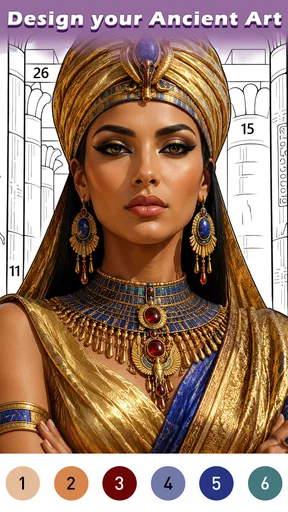

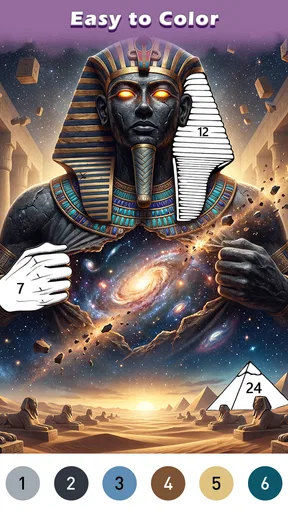
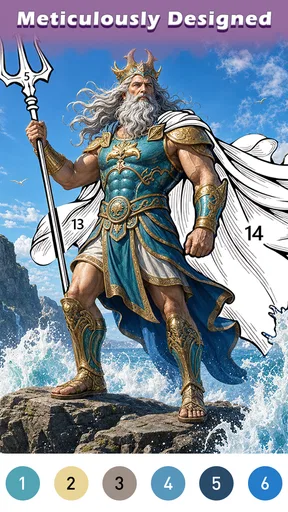

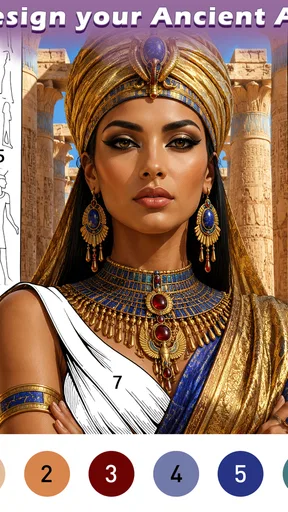

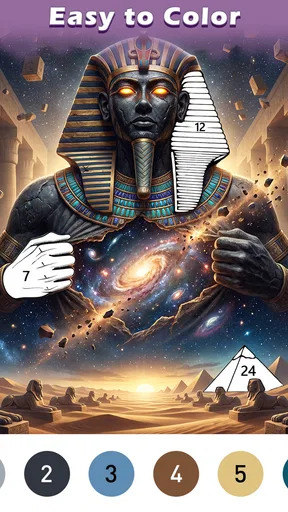
Our Review of Ancient Color By Number Game
 Analysis by Appyee
Ancient Color By Number Game is the kind of board game I open when I want something calm rather than competitive. Its central idea is simple: I choose numbered areas in scenes inspired by ancient ruins and fill them with the matching colors. That makes the first few minutes easy to understand, while the archaeological setting gives the activity more character than a plain collection of abstract coloring pages.
I found the experience best suited to short, quiet sessions. It works when I want to settle down after work, occupy a few spare minutes, or give my attention a gentle task while listening to something else. The game is free to start, carries an Everyone age rating, and comes from Art Coloring Group. Its average rating is 4.7 from around 2.1 thousand ratings, and it has passed over 100 thousand installs, so it already has a useful audience without feeling like a noisy multiplayer board game.
From the first picture to a finished ancient scene
I like to begin a new coloring game by deciding what a satisfying first session looks like: not finishing everything, but seeing one distinct part of the artwork come together. That small target makes it easier to enjoy the details without rushing, and it sets up a useful next question: how to keep the search for matching spaces comfortable as the picture fills in.
What to expect when you begin
The title tells you most of what matters: this is a color-by-number game presented as a board-style pastime. I do not approach it expecting strategy, puzzles with complicated rules, or a story campaign. The satisfaction comes from gradually completing an illustration, watching small empty spaces disappear, and seeing the ruin-themed image become more readable as the colors fall into place.
That focus is important because it sets the right expectations. If you enjoy traditional board games for planning, bluffing, or competing against another person, this will feel much quieter and more solitary. If you like digital coloring but prefer guidance instead of choosing every shade yourself, the numbered format removes much of the decision fatigue. I can concentrate on locating the right spaces rather than worrying about whether my color choices look good.
The ancient setting also changes the mood. Ruins, stone structures, and historical-looking surroundings give the pictures a sense of place, even though the activity remains deliberately relaxed. I appreciate that combination: the subject matter gives me something to look at, while the rules stay light enough for a first-time player to understand immediately.
There is a useful distinction between “easy to start” and “always effortless.” Small sections can still require patience, especially when several areas look similar or when the remaining pieces are scattered across the image. I would treat that as part of the rhythm rather than a flaw. The game is most enjoyable when I accept that completion is the goal, not speed.
Getting ready without overthinking the setup
Installation should appeal to people who want a straightforward entry point. The game is free, although optional in-app purchases range from $0.99 to $59.99 per item. I would keep that distinction in mind before handing the device to a child or letting someone else play on my phone. The Everyone rating makes the content broadly approachable, but the presence of optional purchases still makes it sensible to review the device’s purchase controls.
The listed minimum operating system is 7.1, which gives the game a relatively accessible starting point for compatible devices. Once it is installed, my advice is to begin with a short session rather than trying to judge the entire collection at once. The first useful test is simple: open a picture, identify a numbered area, and see whether the coloring interaction feels comfortable on your screen.
This is also where I would make one practical adjustment. Hold the phone in the position that gives your finger the clearest view of small spaces, and avoid treating the first image as a race. On a compact screen, the difference between a relaxing session and a frustrating one can be as small as taking a moment to inspect the image before tapping repeatedly.
The current version is 1.0.3, so I would keep the app updated through the normal store process. That is not a reason to expect a particular new feature; it is simply a sensible habit for any game that is still early in its version history. For a first-time user, the important point is that the basic path into the game is uncomplicated: install it, open a scene, and start filling spaces.
Your first meaningful success
The first meaningful success is not merely tapping one correct section. It is completing a recognizable part of the illustration, such as a wall, column, or architectural detail, and noticing how that completed area helps the whole scene take shape. I recommend focusing on one visible group of spaces instead of hunting randomly through the entire picture.
Here is the approach that worked best for me. I first look at the available numbers and choose one that appears in several nearby sections. I then work across that cluster, moving from larger, easier areas toward smaller ones. This creates a visible result quickly and reduces the feeling that I am searching the image without a plan. When a number seems to have disappeared from the current view, I scan the edges before assuming I have missed something.
That small workflow is more useful than simply tapping wherever my eye lands. Color-by-number games can become repetitive when every action feels disconnected. Grouping matching spaces gives the session a quiet structure: identify, collect, complete, then move to the next area. It also makes the ancient artwork easier to appreciate because I am watching sections of the scene emerge rather than staring at isolated marks.
I would not worry if the first picture takes longer than expected. The game’s appeal comes from steady progress, and a finished image feels more rewarding when I have allowed the details to unfold. If I am playing during a short break, I can stop after completing a small section and return later without turning the session into a commitment.
Where new players may hesitate
The most common confusion in this type of game is the difference between seeing a color and finding every area assigned to it. A number may be present in a narrow strip, a corner, or a visually busy part of the ruin. When I cannot find the next matching space, I slow down and inspect the full image instead of tapping quickly in the same region.
Another point of friction is that the artwork can contain similarly shaped architectural details. Two stones or decorative sections may look almost identical at a glance, but their numbers can differ. I found it better to use the number as the authority and the picture as the guide. In other words, I do not color a space because it looks like it belongs with its neighbor; I color it because its number matches the selected color.
Small areas are where patience matters most. Rapid tapping can make the experience feel less precise, particularly when several tiny sections sit close together. I get better results by moving deliberately and checking the number before each tap. That sounds obvious, but it is the habit that prevents the most avoidable mistakes and keeps the game relaxing.
I also recommend resisting the urge to judge the image too early. Before enough sections are filled, the scene may look flat or unfinished. The visual payoff arrives gradually, so the middle of a picture is not a reliable indication of how satisfying the final result will be. For me, the strongest moment is often the last group of details, when the ruins finally read as a complete composition.
How to make the quiet format work in daily life
A realistic use case is a ten-minute wind-down after dinner. I can open a scene, complete a few connected sections, and stop before the activity becomes another demanding task. The ancient setting helps distinguish it from scrolling through social feeds, while the numbered structure gives my hands something specific to do.
It also fits a waiting-room routine or a commute when I have a seat and want an offline-style pastime rather than a competitive match. I would avoid starting a detailed picture when I know I have only a minute, because stopping just as I begin searching for tiny areas can feel less satisfying. A better habit is to begin when I can give the scene enough uninterrupted attention to complete one visible portion.
For families, the Everyone rating makes the subject matter approachable across ages, but I would still explain the color-by-number idea before leaving a younger player alone with it. The game is easy to understand, yet small sections may test patience. An adult can make the first session more enjoyable by showing how to choose one number and work through a nearby group rather than tapping at random.
For adults who use coloring as a way to decompress, the trade-off is clear. The numbered system provides structure, but it also limits creative control. I cannot freely redesign the ruins or experiment with my own palette in the same way I could in an open coloring app. That makes Ancient Color By Number Game better for guided relaxation than for artistic expression.
What separates it from familiar alternatives
Compared with a conventional board game, this is not about turns, opponents, resource management, or winning through clever decisions. Its board-like identity comes from the organized play area and the methodical interaction, not from traditional tabletop rules. I would choose it when I want the familiar comfort of a simple activity without needing another player.
Compared with a general coloring app, the numbered approach is more reassuring for anyone who does not trust their own color choices. The game tells me where each color belongs, so I can focus on completion and visual discovery. The cost of that convenience is reduced freedom: someone looking for brushes, custom palettes, or a blank canvas would be better served by a dedicated creative tool.
Compared with a fast puzzle game, the pace here is intentionally gentle. There is less pressure to optimize every move, but also less mental challenge for players who want complex problem-solving. I would not install it as my main game if I wanted escalating difficulty or competitive replay value. I would install it as a calm companion for pauses in the day.
The ancient-ruin theme is the strongest reason to choose this particular color-by-number title over an interchangeable one. It gives the pictures a consistent atmosphere and makes the act of filling areas feel like revealing a preserved place piece by piece. If that setting appeals to you, it adds enough identity to justify trying the game. If you have no interest in historical scenery, the underlying activity may feel familiar rather than distinctive.
Managing purchases and deciding how far to go
Because the game is free with in-app purchases, I would begin by enjoying the available starting experience before considering any optional spending. The listed purchase range runs from $0.99 to $59.99 per item, which is a wide enough spread that I would pay attention to the exact item and the purchase confirmation screen. I would never assume that a small entry price describes every optional purchase.
This matters especially in a shared-device household. Someone who only wants a calm coloring session may not be thinking about the financial side of an in-game choice, while the person responsible for the device may prefer tighter controls. Setting those boundaries first keeps the relaxing purpose from being interrupted by an unwanted surprise.
My own rule would be to treat purchases as optional conveniences rather than part of the basic reason to try the game. The core appeal is the act of completing ancient scenes, and that appeal can be evaluated without rushing into a transaction. Players who dislike any free-to-play structure should skip this one and choose a paid coloring experience with a simpler purchase model instead.
Who should try it, and who should move on
I would recommend it to first-time color-by-number players, casual board-game fans who enjoy solo activities, and anyone drawn to relaxing images of old ruins. It is especially approachable if you want a clear first action instead of a tutorial full of rules. Pick a number, find its spaces, and complete a small area; that is enough to understand the basic loop.
I would also recommend it to people who enjoy measurable progress without demanding competition. Finishing a section gives the session a natural stopping point, which is useful when I want entertainment that can fit around daily responsibilities. The game does not need to take over the evening to feel worthwhile.
I would skip it if I need multiplayer interaction, deep strategy, or unrestricted creative coloring. I would also look elsewhere if repeated tapping and careful searching feel tedious to me. The same qualities that make the game soothing for one person can feel slow for another. A more active puzzle or a competitive board game would be a better match for players who want tension and surprise.
My next-step advice after the first picture
After finishing the first scene, I would not immediately chase the most complicated-looking image. I would use the next session to test whether the game’s rhythm suits me: choose a picture, work in connected number groups, and stop at a natural visual milestone. That tells me more about long-term enjoyment than simply completing one image in a burst.
If I keep playing, I would vary my sessions. On a busy day, I would complete one compact area. On a quieter evening, I would aim for a larger portion of a scene and let the ancient setting carry the mood. This approach prevents the game from turning a relaxing pastime into a checklist.
Art Coloring Group has made a focused board-style coloring game rather than an all-purpose art studio. In my experience, that focus is its advantage: the rules are approachable, the ruin theme gives the artwork a recognizable identity, and the progress loop is easy to fit into everyday life. Its limitations are just as clear, with little appeal for competitive players and less freedom than open-ended coloring tools.
My recommendation is to try Ancient Color By Number Game if you want guided, low-pressure coloring with an archaeological atmosphere. Start with one small successful section, keep your tapping deliberate, and decide afterward whether the calm repetition feels rewarding. For the right player, that modest loop is exactly what makes the game worth keeping around.
Verdict
Strengths of Ancient Color By Number Game
- Relaxing gameplay suitable for short breaks or longer coloring sessions.
- Ancient-themed artwork offers a distinctive alternative to standard coloring books.
- Simple tap-to-color controls are easy for beginners to understand.
- Completed images provide a satisfying sense of progress and achievement.
- Works well for users who enjoy creative activities without drawing skills.
Limitations of Ancient Color By Number Game
- Some detailed pictures may require considerable time and patience to finish.
- Repeated tapping can feel monotonous during longer coloring sessions.
- Hints or extra tools may be limited unless earned or purchased.
- The visual style may appeal less to users seeking modern or realistic artwork.
- Progress could feel slow when many colors or small sections are involved.
Other Releases by Art Coloring Group
View All
Bible Color Paint By Number
Board4.8

Nostalgia Color by number game
Board4.4

Macabre Color Paint By Number
Board4.8

Black Color Paint By Number
Trivia4.8
Similar Picks in This Category
View All
Ludo King®
Gametion4.1

Ludo
Yarsa Games4.6

Tile Master® - Matching Game
Higgs Studio3.6

Checkers Online
CC Games4.6

Dominoes
Loop Games4.7

Chess
Chess Prince4.6
Frequently Asked Questions
What is Ancient Color By Number Game?
Ancient Color By Number Game is a relaxing coloring app built around historical, archaeological, and mythological artwork. Players select an image and fill numbered sections with the matching colors. Its themes may include ancient buildings, statues, symbols, landscapes, and characters inspired by past civilizations. The simple controls make it suitable for casual play, creative relaxation, and short sessions.
How does the coloring gameplay work?
After choosing a picture, the game displays numbered areas that correspond to specific colors in the palette. You can tap a color and then select the matching sections, or use the highlighted-number guidance to find unfinished areas. The goal is to complete the illustration accurately. The gameplay is generally straightforward, although smaller sections may require careful tapping on a phone screen.
Is Ancient Color By Number Game free to download and play?
The game can generally be downloaded without an upfront purchase, but the exact monetization model may vary by platform and version. Some content or tools may be available through advertisements, optional purchases, or premium features. Before installing, check the store listing for details about in-app purchases, advertising, subscription terms, and whether all artwork is included in the free version.
Does the game require an internet connection?
An internet connection may be needed for the initial download, advertisements, updates, analytics, or unlocking certain content. Basic coloring sessions may work offline if the relevant images have already been downloaded, but this is not guaranteed for every version. If you plan to play while traveling or without mobile data, test the app offline first and review its store requirements.
Is Ancient Color By Number Game suitable for children?
The basic coloring mechanics are easy for children to understand, and the historical themes can make the experience appealing and educational. However, parents should review the recommended age rating, advertising, in-app purchase options, and privacy information before allowing younger users to play. Some detailed artwork may be better suited to older children, teenagers, or adults who enjoy patient, relaxing activities.
Play our best games!


